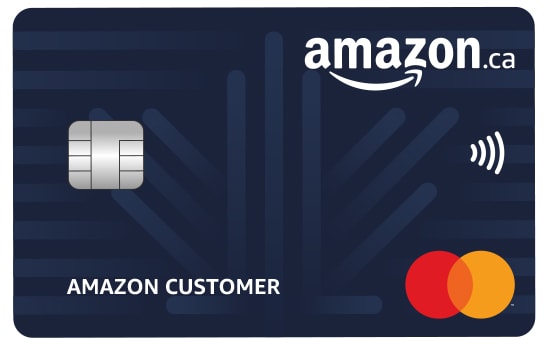
If Amazon.ca takes up a noticeable part of your monthly spending, the credit card you use can make a bigger difference than you might expect.
The obvious option is the Amazon.ca Rewards Mastercard, but that does not automatically make it the best credit card for every Canadian Amazon shopper.
The answer depends mainly on three things: how much you spend at Amazon, whether you already have Amazon Prime, and what your other credit cards earn on the same purchases.
The Short Answer
For Canadians who already have Amazon Prime and shop frequently at Amazon.ca, the Amazon.ca Rewards Mastercard is a strong place to start.
The card currently has no annual fee. After the introductory offer, eligible Prime members earn 2.5% back on eligible purchases at Amazon.ca and Whole Foods Market stores in Canada. Without Prime, the ongoing rate at those merchants is 1.5% back. Other eligible purchases generally earn 1% back.
That Prime versus non-Prime difference matters. Once the Amazon card drops to 1.5% for a non-Prime member, a strong flat-rate rewards card can become much more competitive.
The issuer's current terms are available on the official MBNA Amazon.ca Rewards Mastercard page.
How the Amazon.ca Rewards Mastercard Works
The Amazon.ca Rewards Mastercard is issued by MBNA and is designed around Amazon spending.
As of October 10, 2026, MBNA advertises a welcome offer of 5% back for the first six months on the first $3,000 in eligible purchases at Amazon.ca, Whole Foods Market stores in Canada, grocery stores, and restaurants.
After that introductory period:
- Eligible Prime members: 2.5% back at Amazon.ca and Whole Foods Market stores in Canada.
- Non-Prime members: 1.5% back at Amazon.ca and Whole Foods Market stores in Canada.
- Other eligible purchases: 1% back everywhere else Mastercard is accepted.
- Annual fee: $0.
Rewards are accumulated as points and redeemed through the Amazon.ca account linked to the card. Under MBNA's program terms, 100 points are worth $1 when redeemed according to the program.
That makes the rewards fairly easy to understand. A 2.5% return on a $100 eligible Amazon.ca purchase is roughly $2.50 in Amazon rewards.
What Does 2.5% Back Actually Mean?
Percentage rewards can sound small until you convert them into dollars.
Suppose you spend $500 per month at Amazon.ca. That is $6,000 per year.
| Ongoing reward rate | Approx. annual rewards on $6,000 |
|---|---|
| 2.5% | $150 |
| 2.0% | $120 |
| 1.5% | $90 |
| 1.0% | $60 |
For an eligible Prime member earning 2.5%, $6,000 of annual Amazon.ca spending would produce roughly $150 in rewards before considering any introductory promotion.
At a hypothetical flat 2% rate, the same spending would produce about $120. At 1.5%, it would be about $90.
The difference between 2% and 2.5% is only half a percentage point, but over thousands of dollars of annual spending it starts to matter.
Is It Worth Getting Prime Just for the Card Rewards?
Usually, Prime should not be justified by the credit card alone.
Prime changes the ongoing Amazon.ca earn rate from 1.5% to 2.5%, an extra 1 percentage point.
If you spend $5,000 per year at Amazon.ca, that extra 1% is worth approximately $50 per year in additional rewards.
So if you already pay for Prime because you value its delivery, entertainment, or other membership benefits, the enhanced 2.5% earn rate is useful. But joining Prime only to unlock the extra credit-card reward rate may not make financial sense on its own.
When Could Another Credit Card Be Better?
This is where comparing your full spending profile matters.
The Amazon Mastercard is strongest at Amazon.ca and Whole Foods when you qualify for the higher Prime rate. But most households also spend heavily on groceries, dining, gas, transit, recurring bills, travel, and other everyday purchases.
A card that earns only 1% on most purchases can lose ground quickly if another card earns substantially more in the categories that dominate your monthly budget.
A simple strategy could be:
- Amazon.ca purchases: Amazon.ca Rewards Mastercard.
- Groceries, dining, travel, or recurring bills: whichever card gives you the strongest net return in those categories.
There is no rule saying one credit card has to win every category. In many cases, a good two-card combination can generate more value than forcing every purchase onto a single card.
If you are deciding between specific cards, use ClearFin's side-by-side credit card comparison to see where each one earns more.
What About the 5% Welcome Offer?
The current introductory offer is attractive, but it should not be the only reason you choose the card.
MBNA currently advertises 5% back during the first six months on the first $3,000 in qualifying purchases at Amazon.ca, Whole Foods Market stores in Canada, eligible grocery stores, and restaurants.
If you naturally spend the full $3,000 on eligible purchases during that period, 5% represents approximately $150 in rewards.
The important word is naturally.
Spending more than you otherwise would just to hit a credit-card promotion can erase the value of the reward. A welcome offer lasts a few months; the ongoing rewards structure can affect your wallet for years.
That is why ClearFin puts more weight on what a card does with the spending you already have.
What If You Shop on Amazon.com in U.S. Dollars?
Foreign-currency purchases need a separate calculation.
Eligible Prime members currently earn 2.5% back on eligible foreign-currency transactions, while non-Prime members earn 1% back on eligible foreign-currency transactions. MBNA describes the enhanced Prime rate as helping cover foreign-transaction fees.
That does not mean the card has no foreign-exchange fee.
If you regularly buy from Amazon.com or another foreign website, compare the reward rate after foreign-exchange costs rather than looking only at the headline rewards rate.
A useful way to think about it is:
foreign-exchange cost − rewards earned = your approximate net cost
For frequent foreign-currency spending, a card with no foreign-transaction fee may still be a better fit. See our guide to credit cards with no foreign transaction fees in Canada for the broader comparison.
Who Is the Amazon.ca Rewards Mastercard Best For?
The card makes the most sense for someone who:
- already has Amazon Prime;
- regularly shops at Amazon.ca;
- wants a card with no annual fee;
- prefers straightforward Amazon rewards; and
- is comfortable using another card for categories where the Amazon card only earns 1%.
It becomes less compelling when Amazon represents only a small part of your spending or when a card already in your wallet gives you a competitive flat earn rate across most purchases.
The Mistake to Avoid
Do not choose a credit card only because it carries the logo of the store where you shop.
Always ask one more question:
What would another card have earned on exactly the same purchase?
A card that is a strong fit for someone spending $800 a month at Amazon.ca could be almost irrelevant for someone spending $75.
Your total spending pattern matters more than the name printed on the card.
Let Your Spending Decide
There is no single best credit card for every Canadian. There is only the card that fits your spending better.
ClearFin compares 120+ Canadian credit cards across 19 issuers and looks at reward rates, annual fees, income requirements, and credit eligibility to help you identify stronger matches based on how you actually spend.
Use the ClearFin credit card calculator to run your own monthly spending through the numbers, or compare cards side by side if you already have two options in mind.
You can also browse our best cash back credit cards in Canada and best no-fee credit cards in Canada if keeping annual costs low is the priority.
Bottom Line
If you are already an Amazon Prime member and spend heavily at Amazon.ca, the Amazon.ca Rewards Mastercard deserves serious consideration because of its 2.5% ongoing earn rate at Amazon.ca and Whole Foods Market stores in Canada, combined with a $0 annual fee.
If you are not a Prime member, the ongoing 1.5% Amazon.ca rate makes the decision less obvious. That is when comparing the Amazon card with the cards already in your wallet becomes more important.
Your spending should decide the card — not the logo on it.
Last checked: October 10, 2026. Credit-card offers, reward rates, fees, and eligibility requirements can change. ClearFin is independent of banks and card issuers. Confirm current product terms directly with the issuer before applying.